
Central Vacuum for Allergies and Pet Hair in the Metro East
A portable vacuum blows fine dust and dander right back into the air, which is the last thing you want if someone in the house has allergies or asthma, or your dog and cat shed all year. A central vacuum sends all of it out of the room through in-wall tubing to a canister in the garage or basement. Air Lion sells and installs these systems across Collinsville and the Metro East. Call Kyle at (618) 223-8880 for a free in-home consultation.
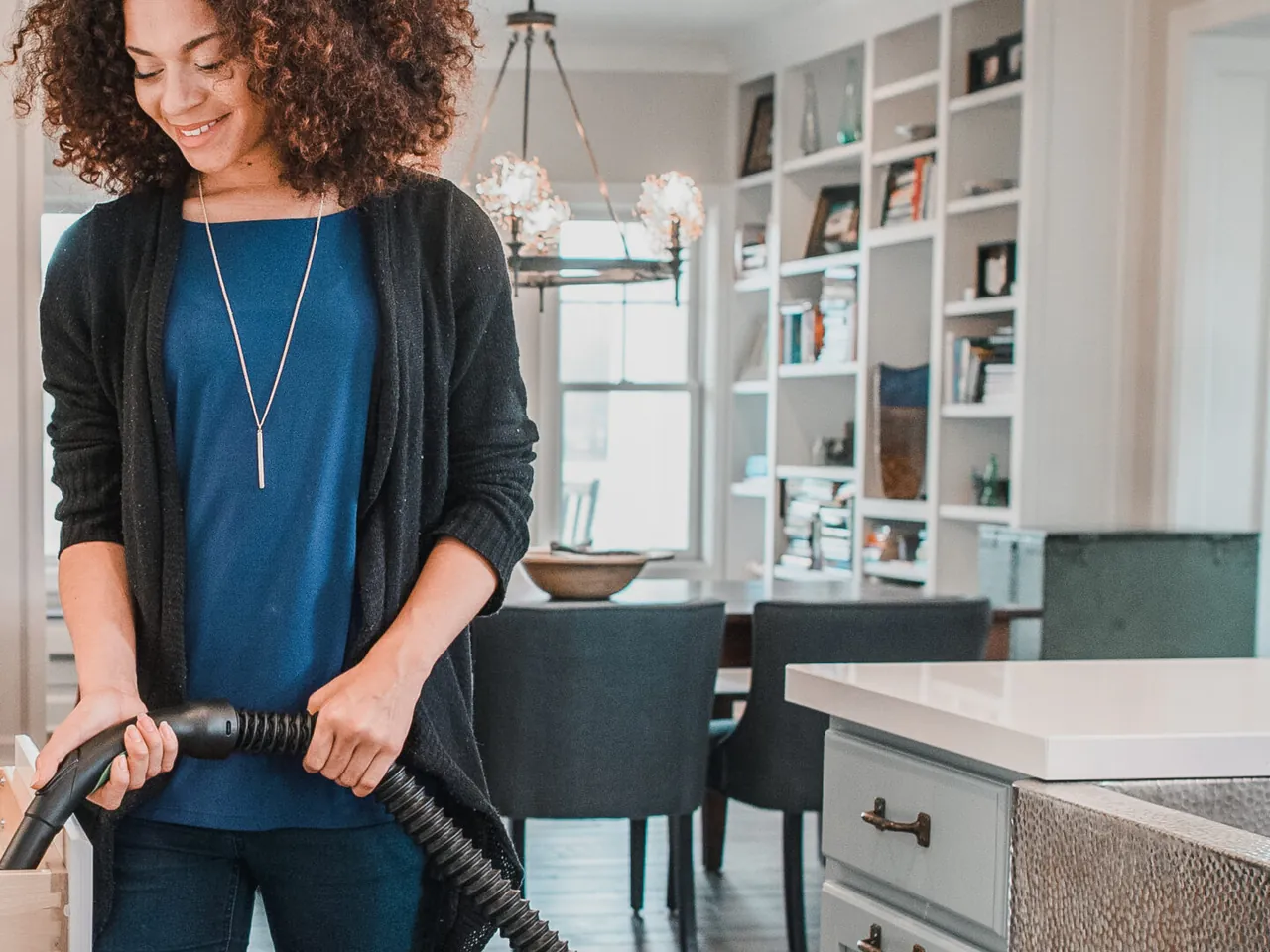
Why a portable vacuum makes allergy and pet homes worse
A portable vacuum filters its exhaust in the same room you are cleaning. The motor pulls air in, the bag or filter catches the big stuff, and the finest particles blow straight back out the vents at floor level. Dust mite waste, pet dander, the pollen that triggers symptoms: all of it goes back into the room. That is the cloud you smell after vacuuming, and it hangs in the air for hours. For a person with asthma or allergies, the cleanup itself becomes the trigger.
A central vacuum works the opposite way. The power unit sits in your garage, basement, or a back utility room, and the air it pulls in travels through tubing inside your walls all the way to that unit. The dust, dander, and pet hair leave the living space completely, so nothing recirculates where your family sits and sleeps. A UC Davis School of Medicine study measured this directly and found that allergy sufferers using a central vacuum had a real reduction in symptoms compared to using a portable. That is the reason allergy and pet households call us first.
What a central vacuum does for allergy and pet homes.
Dust and dander leave the room for good
The fine particles that trigger allergy and asthma symptoms travel through in-wall tubing to a canister in the garage or basement. They never blow back out an exhaust vent at floor level the way a portable’s do. The air in the room you just cleaned stays clean.
No after-vacuum dust smell
That stale, dusty smell hanging in the air after you run a portable is recirculated exhaust. Route the motor and the dirt out of the living space and a room you just cleaned smells like nothing. For a sensitive nose or a tight chest, that difference is immediate.
A turbine powerhead that pulls embedded pet hair
Shed hair works its way down into carpet, area rugs, and upholstery, where a weak vacuum rides right over the top of it. The turbine powerhead beats and lifts that embedded hair, and the far stronger suction of a remote power unit carries it away in one pass instead of three.
Cleaner air for the whole house, not one room
The system reaches every inlet at full strength and vents the dirt outside the living space, so you are not just cleaning floors. You are pulling the allergen load out of the air the whole family breathes, in the bedroom of the kid with asthma and the living room where the dog sleeps.
Setting up a system for an allergy and pet household
The layout we design for an allergy or pet home is a little different from a standard install. When Kyle comes out for the free in-home consultation, he plans inlets and tools around where the dander and hair actually collect, and makes sure the exhaust ends up well away from the living space. Here is what we focus on for this kind of house.
- Put the power unit in the garage or basement and vent its exhaust outside, so the finest particles leave the building entirely instead of venting near a living area.
- Add a turbine powerhead and an upholstery tool to the kit, since pet hair lives in carpet and on the couch and chairs, not just on hard floors.
- Place wall inlets so the pet’s favorite rooms and the bedrooms of allergy sufferers are all reachable on one light hose, with no machine to drag from room to room.
- Add the Hide-A-Hose retractable system so the hose stores inside the wall and does not collect dust between uses.
Allergy and pet homes central vacuum questions.
Does a central vacuum really help with allergies and asthma?
How does it handle heavy pet hair?
Will I still smell that dusty exhaust after cleaning?
Can you install one in a house that is already built?
How often do I have to empty it, and how long does it last?

Get a system sized for your space.
Call Kyle for a free on-site consultation. We map the inlets, recommend the right tools, and give you a clear quote.